How to Get Cited in AI Search Results
Clear answers, consistent identity, and trusted third-party coverage drive AI citations.
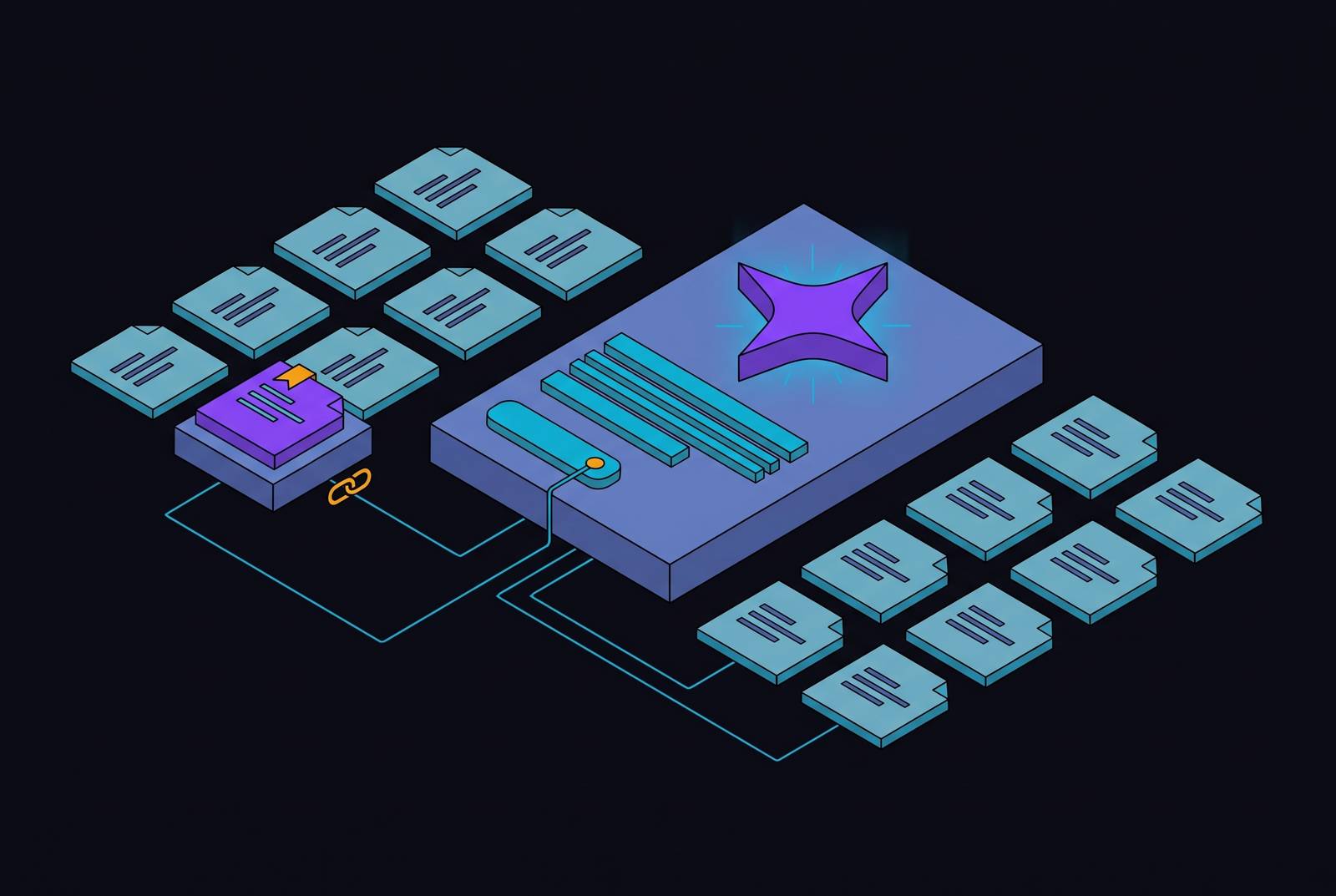
Getting cited in AI search results is an engineering problem as much as a content problem. Brands need clear answers that models can extract, the same identity across sources, and coverage they can trust on the sources they use. Generative engine optimization, or GEO, means working on all three, then measuring whether they change how AI assistants describe and recommend the brand.
Why AI assistants have become a primary discovery channel that brands cannot afford to ignore
Buyers now ask ChatGPT, Perplexity, and Google AI Mode the questions they used to type into Google. Those conversations build “silent shortlists” before a prospect visits a company’s website. A brand’s chance to catch the buyer’s eye depends on entering that shortlist, with inclusion uncertain even for brands with strong organic rankings and limited to a single answer.
Ranking a page still helps, but the page must also feed a system that selects sources and composes its own response. Spending the most on content does not guarantee a win. Teams can build an early advantage by understanding that selection process, yet most are still optimizing mainly for the search results page.
How AI models actually decide which sources to reach for when composing an answer
AI answers come from three different channels, which are training data, live retrieval, and the entity graph. Each responds to different work on a different timescale. Treating them as one channel obscures why a change succeeds or fails. A new page can affect a live search without changing what a model learned during training.
Training data gives the model its learned understanding of a brand. Repeated, consistent mentions across sources such as Common Crawl, Wikipedia, Reddit, GitHub, and news archives contribute to that understanding. Links are not required for every mention to count. The model learns language patterns rather than simply following hyperlinks, and that learned knowledge moves at the pace of model releases.
Live retrieval is when an engine searches as it answers a question. Perplexity, ChatGPT with browsing, Claude with web search, and Google AI Overviews can read sources returned at question time. This channel can respond within days. Publishing on a trusted domain that ranks is therefore still useful. Classic SEO supports AI visibility through this channel.
The entity graph supplies structured information about what a company is. Sources include Wikidata, Wikipedia, Crunchbase, LinkedIn, and schema on the company’s website. This channel is often neglected in B2B. Because engines weight these channels differently, “more backlinks” is too narrow a goal. Consistent, accurate mentions on authoritative sources build recognition, while genuine editorial links can help live-retrieval engines find the relevant pages.
Why most AI brand citations come from third-party sources, not your own website
The main arena for AI citations is outside the company website. Answers draw heavily on industry publications, analyst reports, and consumer reviews rather than taking a brand’s own description at face value. Reputation becomes an input to the answer. A polished homepage cannot take the place of facts from other sources that models can trust, even if that homepage does well in traditional search.
A company can edit its own pages, but it cannot dictate what independent sources say or which ones an engine selects. The response is to give third parties accurate, structured, citable information so that their coverage has a sound basis. Without that work, the model relies on whatever accounts it finds.
Owned content therefore has two jobs. It must answer users directly and supply material that other sources can use. Research, clear product facts, and verifiable claims can serve both purposes. A content program built only to attract visitors to its own domain leaves much of the citation ecosystem untouched.
What the GEO research actually found about which content signals earn citation share
Researchers at IIT Delhi, Princeton, Georgia Tech, and the Allen Institute for AI built GEO-Bench around a ten-thousand-query benchmark. The headline experiment used a subset of its test split to test how content changes affected visibility in generated answers. Quotations from credible sources produced the largest measured gain in position-adjusted word count share, followed by statistics and inline citations.
Readability and fluency also produced substantial gains. Precise, domain-specific terminology helped more modestly, which supports using a field’s exact vocabulary without burying an answer in jargon. Keyword stuffing performed below the unoptimized baseline.
These findings concern share within generated answers, with citation of any edited page remaining uncertain. Freshness is a separate input, too. AI assistants favor fresher content than traditional organic results do, so publication is not the end of the work. The practical consequence is to make supported answers easy to extract and keep them current.
On-page structural choices that make content extractable and citable
Put the direct answer immediately after a question-based heading, in the first sentence or two. “What does X cost?” mirrors a buyer’s question more closely than “Pricing Information.” The answer should not require a long preamble. This is the answer engine optimization, or AEO, layer of the work, where document structure reduces the distance between a question and the text that resolves it.
Schema adds a machine-readable description of that structure. FAQPage and HowTo schema can identify questions, answers, and instructions, but they are not special admission passes to AI results. Google states that no special structured data is required for AI Overviews or AI Mode. It retired FAQ rich results as a visual feature in May 2026 and deprecated HowTo rich results in September 2023. Implement schema to reduce ambiguity.
Crawler access comes next because accessible structure still needs to be reachable. Verify AI crawler access in robots.txt, and consider llms.txt as a newer, AI-friendly index of important content. Keep the text concise and fluent. Author credentials in article schema, named sources for verifiable claims, and consistent organizational data add evidence about who produced the answer and why it deserves trust.
Building authority in the third-party ecosystem models actually ingest
Off-site work needs a sustained program. Start with one precise, accurate company description and use it consistently across the website, LinkedIn, Crunchbase, and eligible knowledge sources. Consistency is the cheapest place to begin. For brands that meet notability criteria, an accurate Wikipedia entry and a matching Wikidata record make the structured identity that models find stronger.
Earned media then extends that identity into independent coverage. Claude favors long-form editorial from established publications, while ChatGPT gets much of its information from earned media. PR should therefore be evaluated for both source placement and traffic. Original data and quotable research give publications something substantive to cite and make the brand the origin of a useful claim.
Reddit is a substantial off-site citation source, while G2, Capterra, and category-specific review platforms feed live retrieval. YouTube is also significant for Google AI Overviews. These surfaces make a text-only, owned-site strategy incomplete, and a brand’s absence from them leaves gaps that homepage edits cannot close.
Owned pages still support this external work through Organization schema, breadcrumb schema, and correct name, address, and phone data. Twenty authoritative descriptions that agree are stronger than two hundred that contradict one another. This work is slow and unglamorous, but it addresses the ecosystem most competitors neglect while polishing individual pages.
How prompt variation strategy reveals where your brand actually stands across different AI engines
One query run by hand cannot show whether that work is paying off. The same prompt on the same engine can produce different brand lists, and different engines can recommend different sets of companies. A snapshot is not a dependable baseline. To measure this, teams need to run prompts more than once and vary them enough to match how buyers ask questions.
Build a stable library covering informational, comparative, and transactional questions. “What tools do people use for [category]?” tests recognition, while “Compare top [category] tools” tests placement among alternatives. “Which tool should a [persona] use?” tests fit for a buyer segment. Together, these questions distinguish being known from being recommended for the job the buyer needs done.
Run each prompt several times in each session on the relevant models, then do the same each week. Record mention rate, position, sentiment, and source citations for each run. Keep results separate by engine. Changes in phrasing can sharply alter which brands retrieval returns, so prompt diversity is a way to expose blind spots.
The stable library supplies the comparison over time, while its range of questions supplies breadth. Both are necessary. If the questions keep changing, a result may change just because the question did, and if the questions lack variety, a strong result may hold only for one narrow phrasing.
What to monitor beyond mere mention frequency — sentiment, citation quality, and competitive share
A mention can be accurate, misleading, or actively discouraging. Counting all three as wins hides the very problems the team needs to track. Wrong pricing, features, or use cases create false impressions. Negative framing from outdated reviews can also shape a buyer’s decision before the brand has any chance to respond, while omission remains invisible without systematic prompts.
Citation and mention should be recorded separately. A passing mention builds awareness, whereas a source citation can send referral traffic and establish the brand as evidence for a claim. The commercial value differs by platform, too. Perplexity sends traffic at a rate that exceeds its raw visit share, while Claude sends markedly less traffic per mention. Gemini has surpassed Perplexity in total AI referral share, so citation performance and overall referral volume are distinct measures.
Competitive share adds the missing denominator. Measuring the brand’s share of mentions across a fixed prompt set and a named competitor set, separately for each platform over time, makes gains and losses comparable. A rise in mentions alone says little about competitive progress if other brands are gaining more of the same answers.
Source quality needs its own audit. A 2026 arXiv audit found evidence of AI-generated sources among citations across real-world queries. More citations do not necessarily mean better support. Monitoring should therefore examine whether the cited sources are authoritative, as well as whether they describe the brand correctly and support the claim the answer makes.
How to build a systematic AI citation monitoring program, and where open-source tooling fits
A monitoring stack must query more than one model, handle changes in prompts, bring results together to show trends, and store data the team can use. The team needs to see visibility, prominence, sentiment, and share of voice for each topic and model. This is ongoing infrastructure. Its purpose is to reveal shifts that a manual spot check cannot distinguish from normal answer variation.
Open-source tools are an option for building that infrastructure. Evaluate them on model coverage, storage ownership, and whether prompt variation is handled systematically or left to manual management. The data is competitive intelligence. It shows which questions surface competitors, which engines favor particular brands, and where sentiment is changing, so it should live in infrastructure the team controls.
For a team starting now, the first work is to align its company description across sources and verify crawler access before establishing a cross-model baseline. The prompt library and weekly sessions then turn that baseline into a standing program, with sentiment and competitive share tracked weekly. Ownership needs to be durable. Entity corrections, third-party coverage, and document updates operate on different timescales, so a single before-and-after check cannot judge them all.
The opportunity is to connect that monitoring to the structural work while competitors still treat AI visibility as a publishing contest. A useful program makes the gaps specific enough to act on, whether they sit in an answer, a company record, or an outside source.